
INDIVIDUAL ATTACHMENT GUIDE
Screening Buckets
Types, screening systems, output size, carrier compatibility, hydraulics, material behaviour, productivity, wear and maintenance.
A screening bucket turns an excavator or loader into a mobile material-processing unit. The correct choice depends on what must pass through, what must stay in the bucket, how wet or abrasive the feed is, and whether the carrier can safely power and lift the complete attachment.
OVERVIEW
What is a screening bucket?
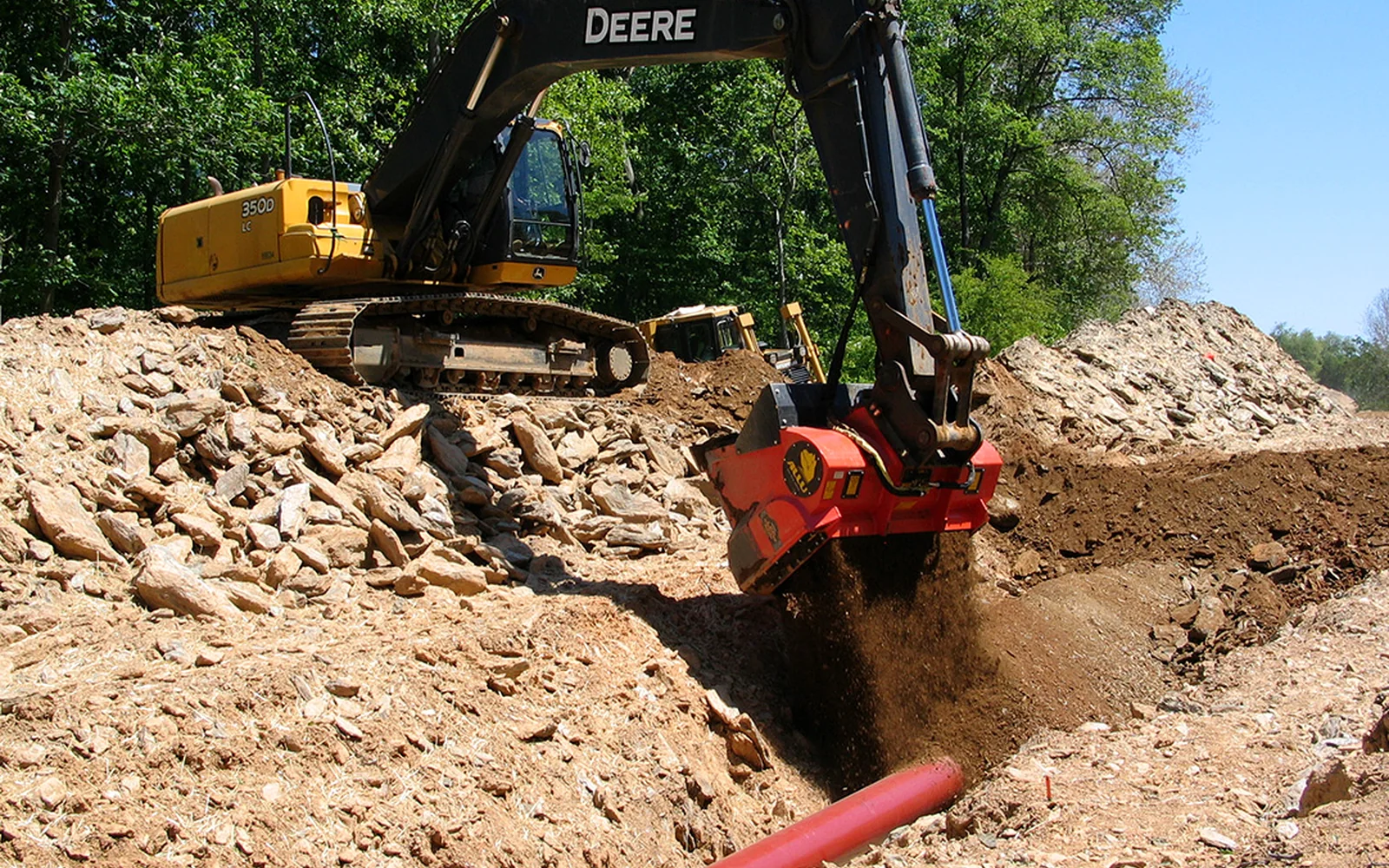
A screening bucket is a hydraulically driven attachment that separates material while it remains on the carrier. Fine material passes through a drum, basket, mesh or rotor system. Oversize material stays inside until it is discharged elsewhere. The attachment can therefore load, screen and place material without a separate stationary screen.
The name covers several very different mechanisms. Some buckets rotate a perforated drum. Others use parallel shafts fitted with discs, stars or blades. Skeleton and riddle buckets have no hydraulic drive and rely on shaking or raking. Flip-style screens rotate the complete basket. These designs do not behave alike in wet clay, clean gravel, demolition debris or compost.
What a screening bucket can do
- Produce usable topsoil or bedding material directly at the work area.
- Remove stones, roots and oversize debris from excavated soil.
- Prepare selected backfill around pipes, cables and drainage installations.
- Separate fines from crushed concrete, brick and mixed demolition material.
- Aerate, blend and break down compost, peat, biomass and lighter organic material.
- Reduce hauling by reusing suitable material before it leaves the site.
SCREENING SYSTEMS
Main screening bucket types
Choose the mechanism around the feed material and desired product. Bucket width or nominal volume alone says little about screening quality.
Rotary drum bucket
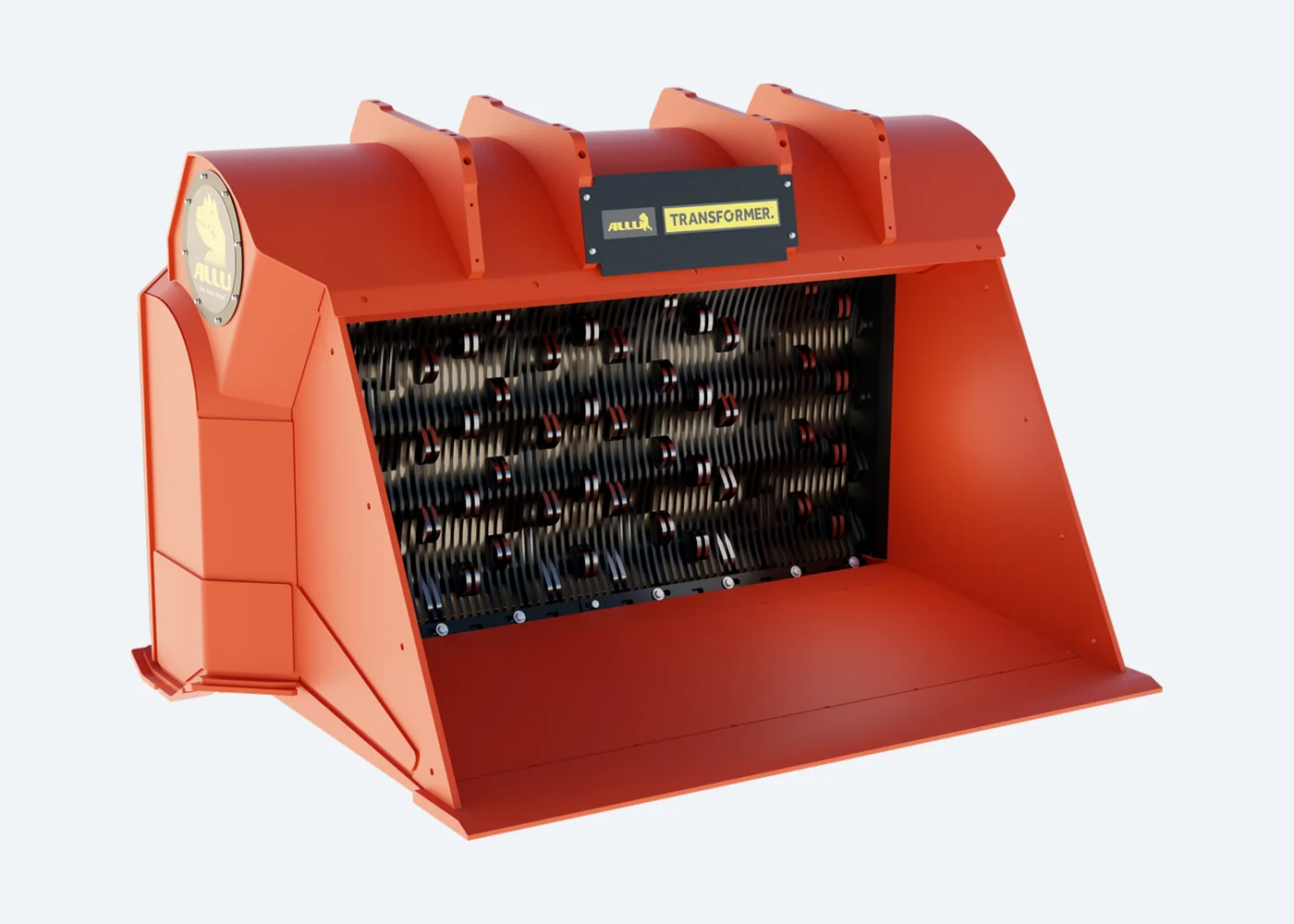
A cylindrical perforated basket rotates inside the frame. It gives a clear cut size and works well with free-flowing soil, sand, gravel and pre-processed demolition material. Interchangeable baskets can change the output fraction.
Shaft or star screen
Parallel hydraulic shafts use discs, stars, blades or paddles to pull material through. The action can break lumps, mix and aerate while screening, making this design useful for topsoil, compost and some damp or cohesive feeds.
Skeleton or riddle bucket
Fixed bars or openings let fines fall through as the operator shakes, rolls or rakes the bucket. It is simple and robust but output consistency depends more heavily on material condition and operator technique.
Flip-style screen
The entire screening basket rotates or flips around a horizontal axis. It can screen a broad range of material and is often selected where fast loading and a large screening area are priorities.
Padding bucket
Optimised for placing screened native soil directly around utilities. The screening action and discharge geometry are intended to produce controlled bedding material without moving the carrier away from the trench.
Screening-crushing bucket
Uses more aggressive rotors or blades to reduce soft lumps while separating material. It is not the same as a jaw crusher bucket and should not be expected to process hard rock or reinforced concrete unless specifically rated.
Selection principle: begin with the required finished material and the most difficult feed condition. A bucket that performs well in dry sand may clog in wet clay, while an aggressive shaft system that handles soil lumps may produce more fines than a clean drum screen.
DO NOT CONFUSE THE TOOLS
Screening bucket or crusher bucket?
A screening bucket separates material by size. A crusher bucket reduces material size through compression or impact. The two tools can support the same recycling workflow, but they solve different problems.
| Attachment | Primary job | Typical feed | Typical result |
|---|---|---|---|
| Screening bucket | Separate fines and oversize | Soil, gravel, compost, processed rubble | Two fractions with limited size reduction |
| Crusher bucket | Break hard material | Concrete, brick, rock, asphalt where approved | Smaller crushed product |
| Skeleton bucket | Coarse separation during handling | Stone mixed with loose soil | Rough removal of fines |
| Pulverizer | Reduce concrete and expose reinforcement | Demolished concrete sections | Broken concrete and separated steel |
A common sequence is to crush oversize material first and screen it afterwards. Another is to screen soil away from rubble before the hard fraction enters a crusher. Define the process flow before choosing the first attachment.
OUTPUT CONTROL
Opening size is only one part of the finished product
Interchangeable drum baskets are commonly offered in several opening sizes, often covering roughly 20 to 80 mm on excavator models. Other systems use shaft spacing, star geometry, blade thickness or counter-combs to set the nominal fraction. The actual product also depends on moisture, particle shape, feed rate and how long material stays in the bucket.
Nominal opening
The physical mesh, slot or rotor gap. It is the starting point for selection, not a guarantee that every passing particle has the same dimension.
Particle shape
Long, flat pieces can pass through openings smaller than their longest dimension. Irregular demolition material therefore produces a less uniform fraction than rounded aggregate.
Moisture and clay
Damp fines can coat screens and bind particles together. Sticky material may require self-cleaning shafts, wider spacing, lower fill level or pre-drying.
Feed gradation
A bucket filled mainly with material far larger than the openings will have low output and high wear. Pre-sort extreme oversize when practical.
Screening time
Longer rotation can recover more fines, but excessive cycling reduces tonnes per hour and may grind fragile material into unwanted fines.
Wear condition
Rounded mesh edges, bent bars, worn stars and enlarged gaps gradually change the product size. Inspect the screening element, not only the bucket shell.
CARRIER MATCHING
Match weight, geometry and working radius
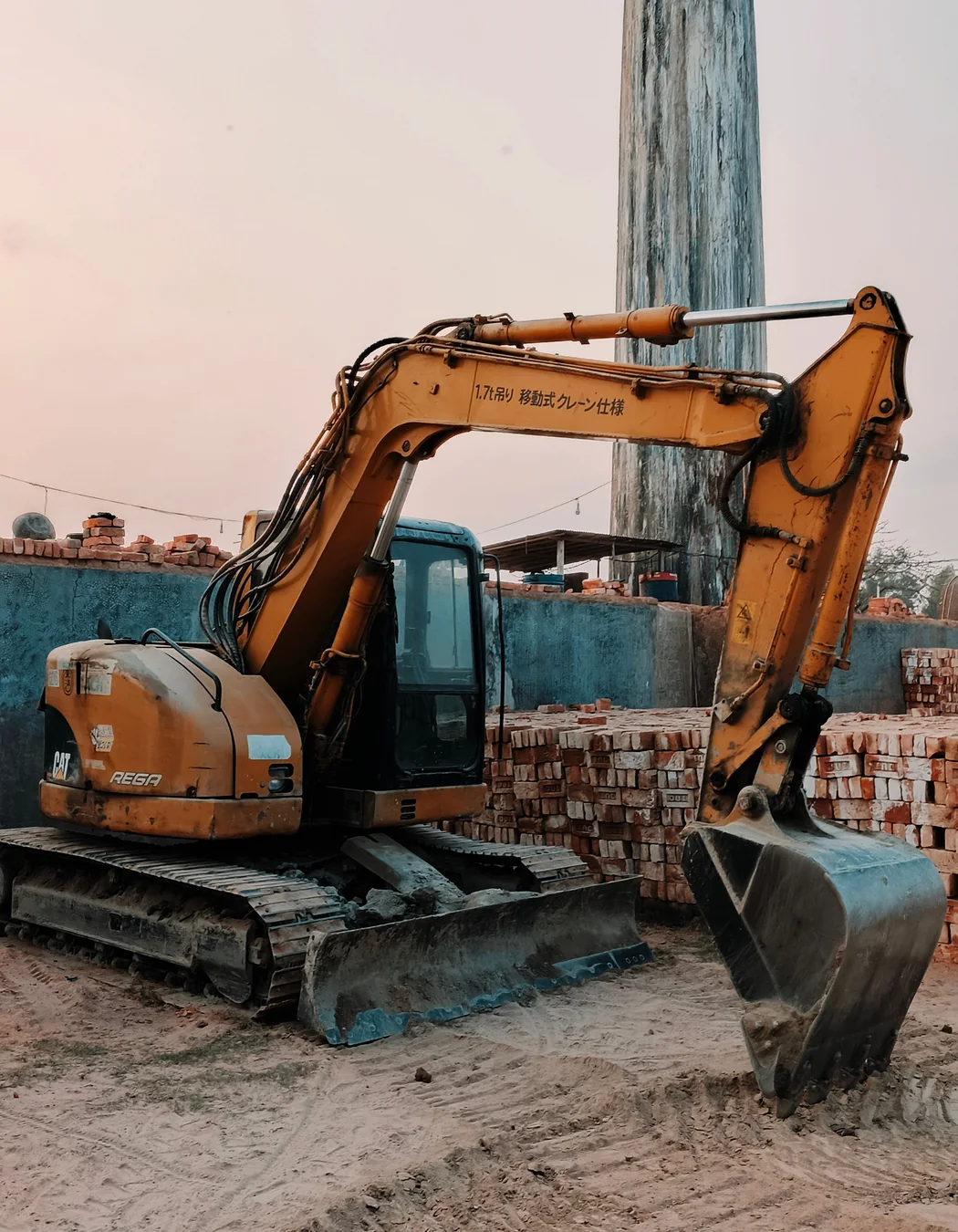
Screening buckets are available for compact carriers and for large excavators and loaders, but the correct match is based on the complete installed system. The carrier must lift the empty attachment, the retained oversize and the material being processed at the intended reach and slew position.
- Installed mass: include adapter, coupler, hoses, oil and any tiltrotator or quick-coupler assembly.
- Loaded mass: use realistic material density and retained oversize, not only nominal bucket volume.
- Load center: a deep bucket or tall coupler moves the mass farther from the stick pin and reduces usable capacity.
- Working position: lifting over the side is often more restrictive than working over the tracks.
- Carrier stability: verify the manufacturer load chart and keep the undercarriage level and properly configured.
- Mounting geometry: confirm pin dimensions, coupler compatibility, crowd angle and clearance through the full linkage movement.
- Transport limits: large buckets may exceed legal width or height even when they fit the excavator.
Never select a screening bucket only from a broad excavator-tonnage label. Two carriers in the same class can have different sticks, counterweights, hydraulic circuits and lift charts.
HYDRAULIC REQUIREMENTS
Flow, pressure and return conditions
A powered screening bucket normally uses an auxiliary circuit to drive a hydraulic motor. Correct flow determines rotor or drum speed. Pressure provides torque when material resists movement. Excessive settings can create heat, shock loads and premature motor, belt or bearing failure.
- Oil flow: stay inside the attachment range and start commissioning at the lower setting.
- Relief pressure: set according to the bucket specification rather than the carrier maximum.
- Return pressure: check the permitted back pressure, especially with long hoses, small couplers or shared return circuits.
- Case drain: some motors require a dedicated low-pressure drain; others do not. Confirm before connection.
- Reversible rotation: useful for clearing bridging and distributing wear, but reversal should be controlled rather than used as repeated impact.
- Hose size and routing: prevent restriction, abrasion, pinching and contact with the rotating drum or linkage.
- Oil cleanliness: protect the motor and valves when the attachment works in dust, fines and demolition contamination.
After installation, run the empty bucket slowly, verify rotation direction, inspect leaks and monitor oil temperature. Then increase load gradually while checking that speed remains controlled rather than violent.
FEED MATERIAL
Dry rock and wet clay require different answers
Screening performance is governed as much by the feed as by the machine. Test or describe the worst material condition, not the best sample from a dry stockpile.
Coarse and abrasive material
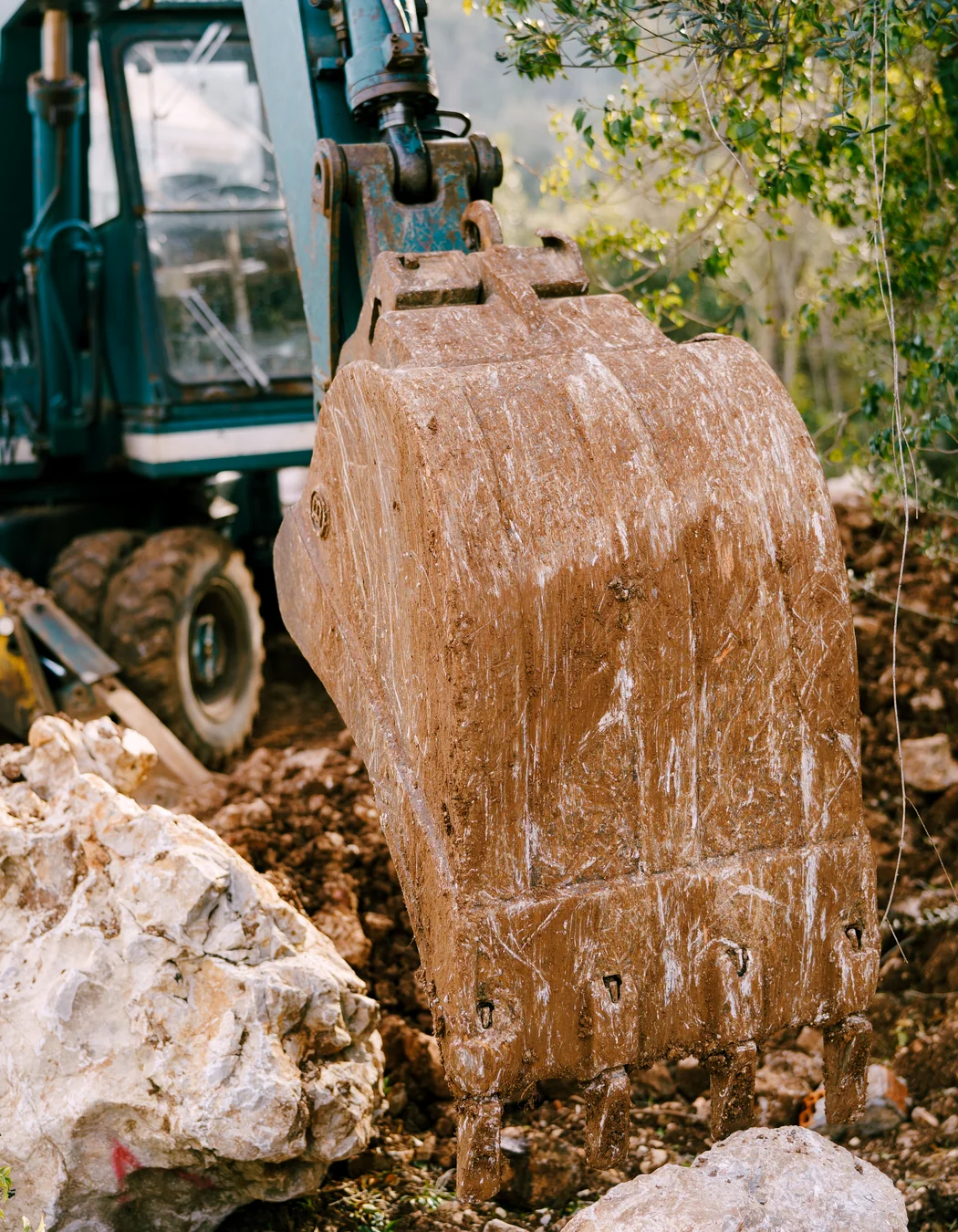
Stone, crushed concrete and quarry material demand a robust shell, protected drive system and replaceable screening elements. Large sharp pieces can wedge between a drum and frame, bend bars or concentrate impact on shafts. Pre-sort extreme oversize and avoid using the screening mechanism as a rock crusher unless the design is rated for it.
- Use wear-resistant screens, side liners and replaceable leading-edge protection.
- Check maximum individual lump size and permitted feed density.
- Keep the bucket below the fill level that allows material to tumble freely.
- Inspect basket joints, shaft ends and frame clearances for impact damage.
Wet and sticky material
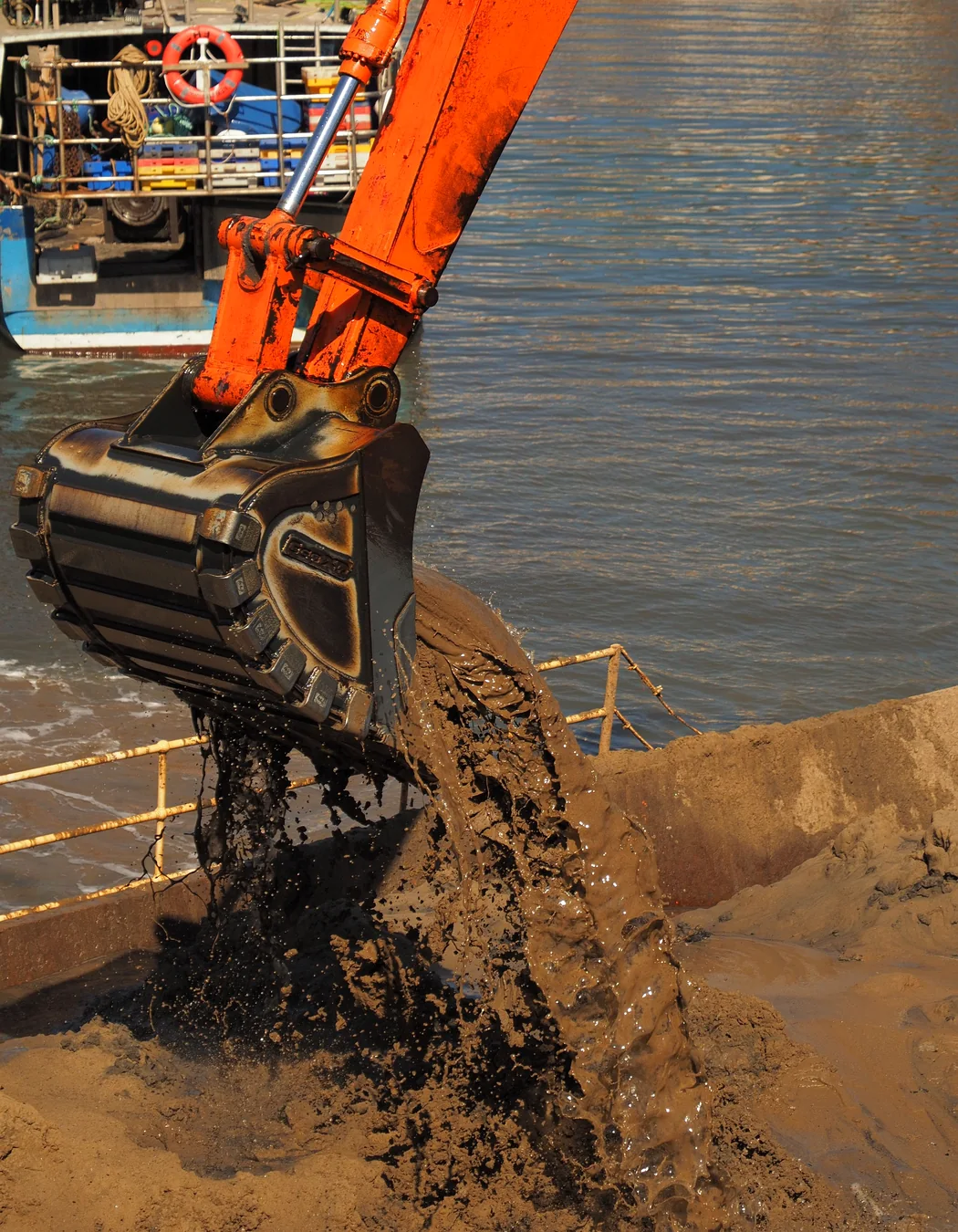
Clay and wet fines can blind a perforated basket or move as one heavy lump. Shaft screens with self-cleaning geometry may handle cohesive feed better, but no system is immune to unsuitable moisture or excessive fill. Smaller openings usually make clogging more severe.
- Use the widest acceptable output spacing for the application.
- Feed smaller batches so the material can move across the screening area.
- Reverse only as the manufacturer permits to clear bridging.
- Avoid packing the bucket by digging aggressively into saturated ground.
- Plan cleaning methods that keep workers outside stored-energy and pinch hazards.
APPLICATIONS
Topsoil, landscaping and site preparation
Topsoil screening removes stones, roots and construction debris before the material is spread. Shaft and star systems can also aerate and blend soil while breaking softer lumps. The desired result is usually a workable product, not an extremely precise laboratory fraction.
- Choose opening size around the finished landscape requirement.
- Keep roots, wire and long flexible debris from wrapping around shafts.
- Avoid over-processing dry soil into excessive dust.
- Separate contaminated or unsuitable material before it enters the bucket.
- Stockpile screened and oversize fractions so they do not mix again.
Aggregate, quarry and roadwork
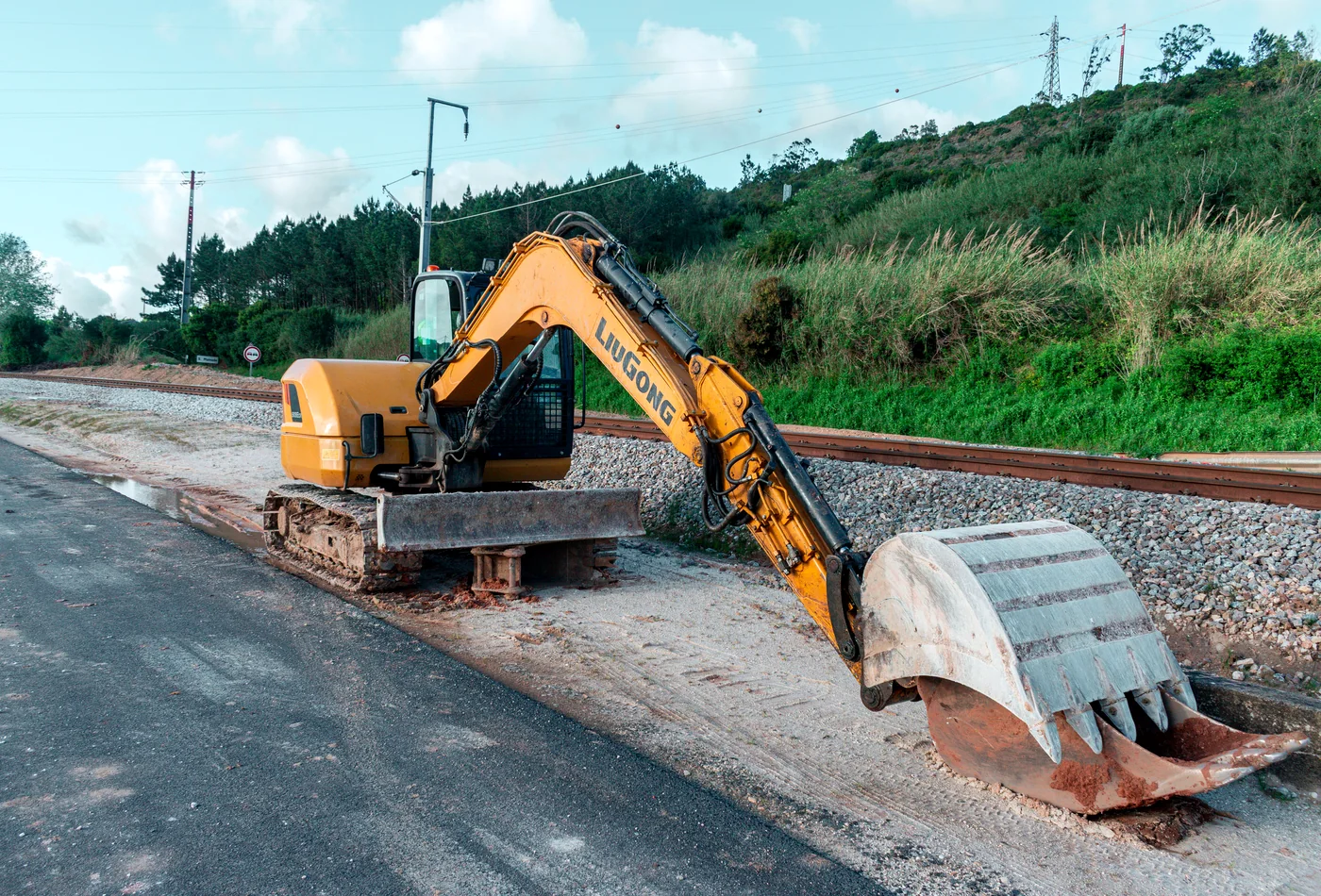
Screening buckets can separate fines from gravel, clean previously crushed material and prepare selected aggregate for backfill or sub-base work. Production depends on having enough fines to pass and enough free movement inside the bucket.
- Confirm that the required product specification can be achieved with a bucket screen.
- Use a basket or rotor built for abrasive feed and inspect openings frequently.
- Do not assume material that looks clean is free from damaging steel or wire.
- Place the carrier so screened product falls onto a prepared, uncontaminated stockpile.
- Compare bucket production with a mobile screen when daily volume is high.
RECYCLING
Demolition waste and mixed construction material
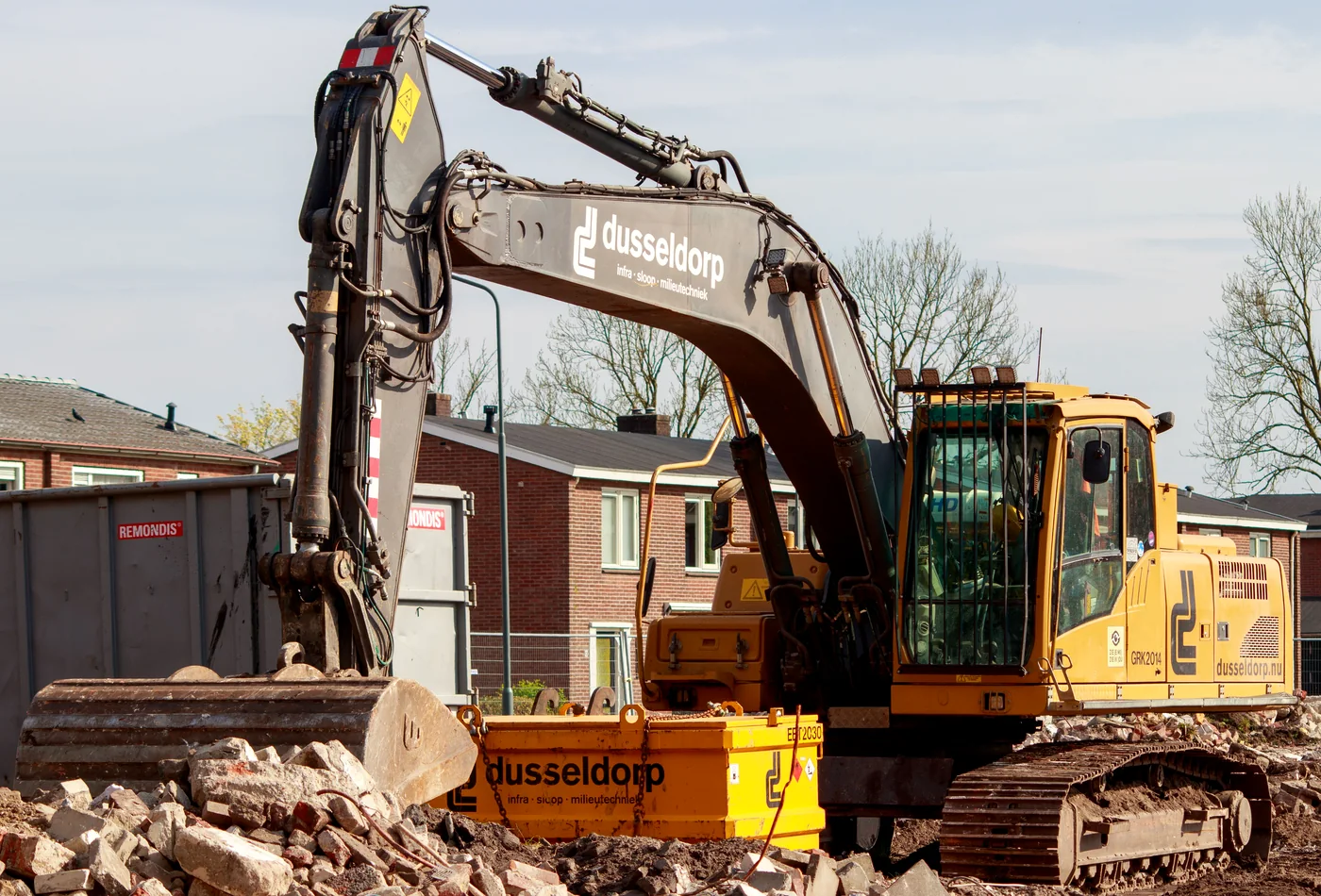
A screening bucket can remove soil and fines from broken brick, concrete and mixed rubble before crushing or disposal. It can also classify previously reduced material. The feed must be free of hazards that can wrap, puncture or jam the mechanism.
- Remove long reinforcement, cables, straps, textiles and sheet material before screening.
- Treat plaster, insulation and hazardous building material according to site rules.
- Limit individual lumps to the attachment specification.
- Use dust suppression and cab protection appropriate to the material.
- Keep screened fines, recoverable aggregate and residual waste in separate areas.
Compost, peat and biomass
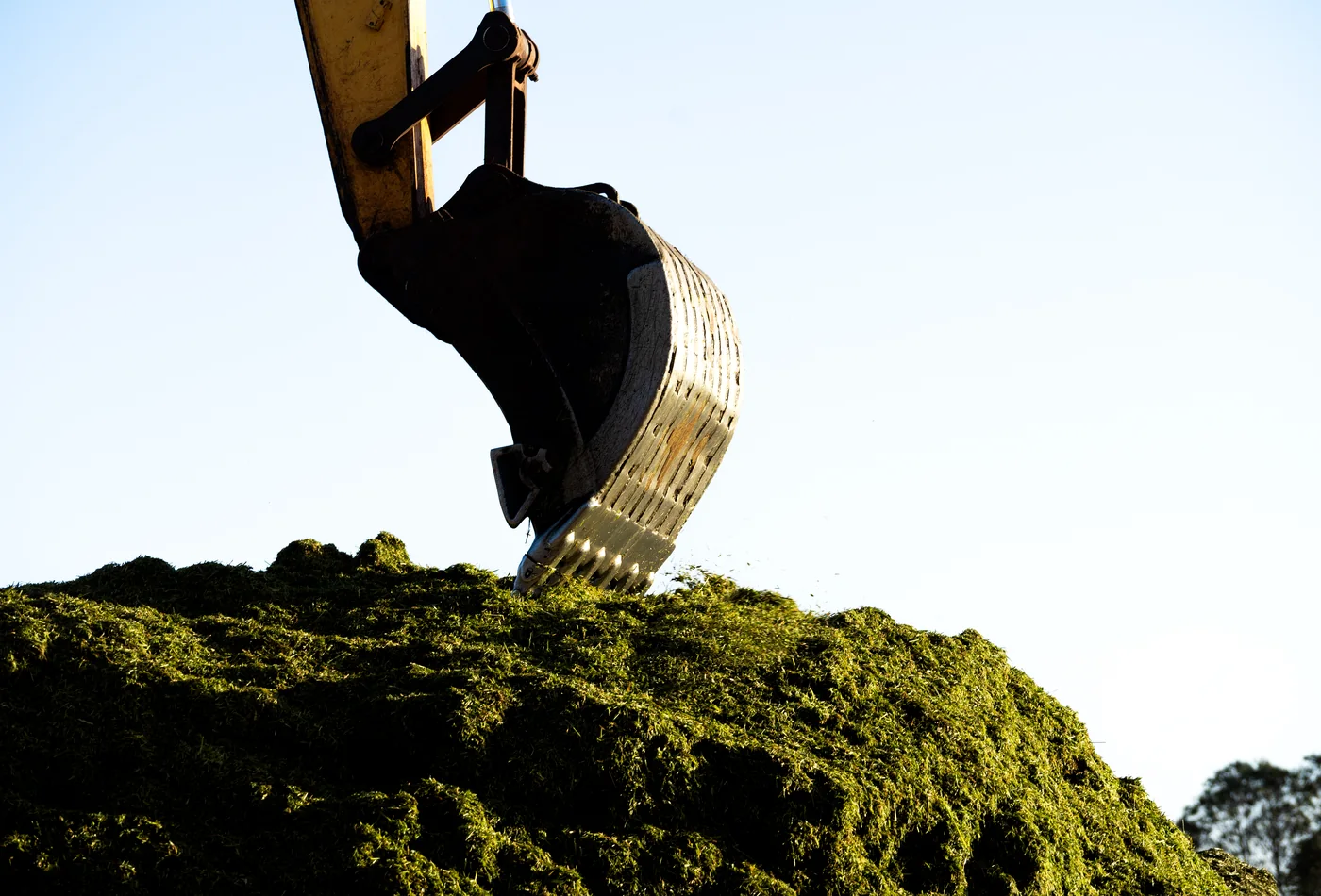
Organic material benefits from screening, mixing and aeration. Flexible roots and fibrous waste can wrap around shafts, while very wet compost can bridge. The correct rotor geometry and cleaning access are therefore more important than nominal bucket volume.
- Define whether the goal is separation, blending, aeration or all three.
- Check resistance to wrapping and the method for clearing long fibres.
- Avoid contaminating finished compost with soil from the work pad.
- Monitor bearing seals and clean corrosive organic residue after use.
- Use a lighter, faster cycle rather than compacting material into the bucket.
OPERATING TECHNIQUE
Load less, keep material moving and protect the screen
The bucket needs free volume for material to tumble or travel across the screening elements. Filling it to the lip can reduce output, increase hydraulic demand and turn the retained mass into a solid plug.
Productive cycle
- Take a controlled bite rather than forcing the bucket completely full.
- Move away from the excavation face before starting the screening cycle where site conditions require it.
- Hold the bucket at the angle recommended for material circulation.
- Screen above the correct stockpile, trench or container and maintain visibility.
- Stop when useful fines have passed instead of polishing oversize indefinitely.
- Discharge retained oversize into a separate controlled area.
- Investigate repeated stalls rather than increasing pressure or reversing violently.
Measure output as usable tonnes or cubic metres per hour, including loading, screening, discharge, travel and cleaning time. A larger bucket can be slower if it overloads the carrier or cannot circulate material.
SERVICE LIFE
Wear points and preventive maintenance
Screening buckets combine normal bucket wear with rotating components, hydraulic drive parts and very close clearances. Daily inspection prevents small deformations or worn elements from damaging the complete mechanism.
Leading edge and teeth
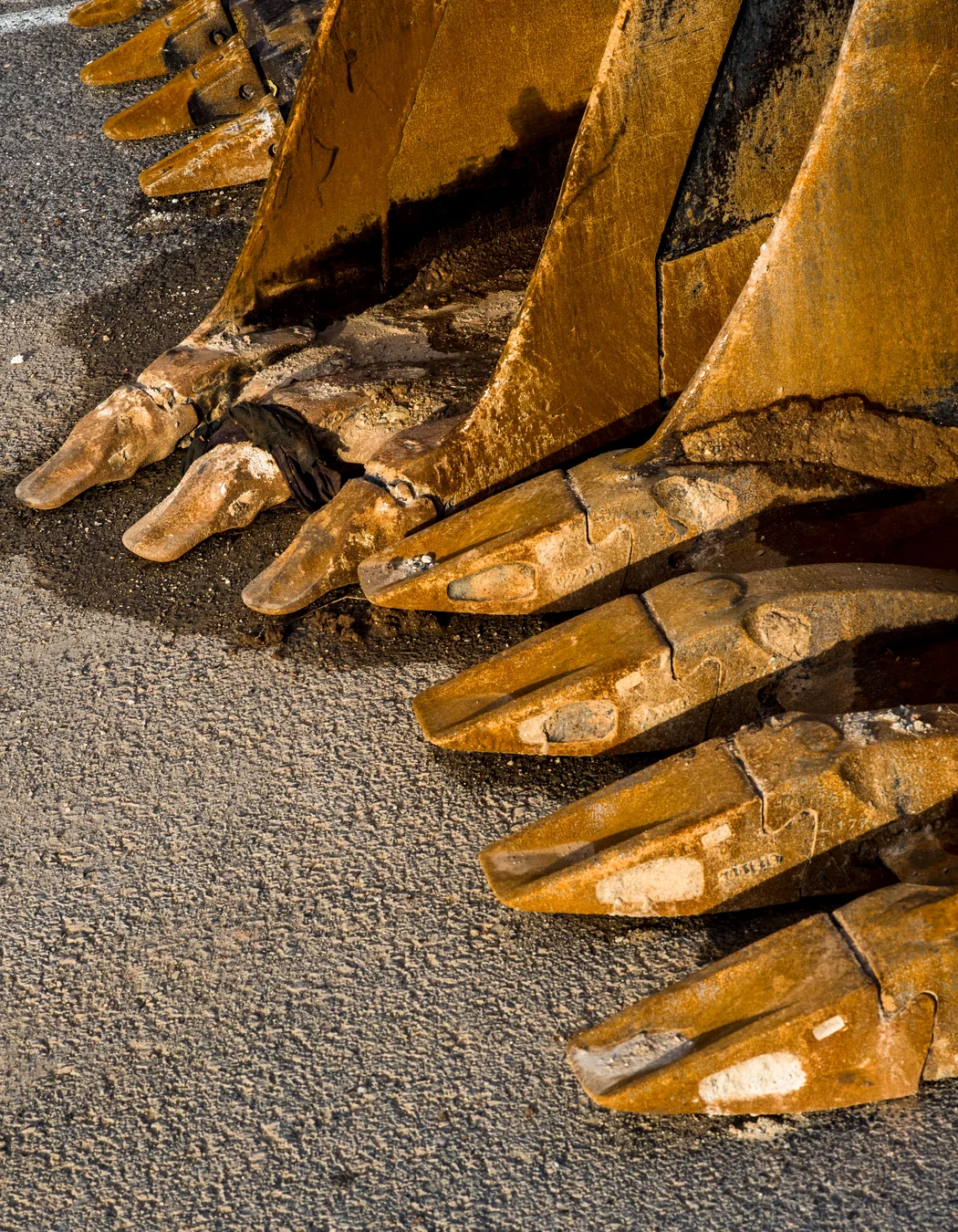
Inspect the cutting edge, teeth, adapters and side cutters before wear reaches the bucket shell. A damaged loading edge also changes filling behaviour.
Drum, shafts and mesh
Look for bent bars, cracked welds, missing stars, enlarged openings, packed material and uneven wear across the screening width.
Bearings and seals
Check heat, noise, play and contamination. Follow grease intervals and do not direct high-pressure cleaning at seals unless approved.
Motor and transmission
Inspect motor mounts, couplings, belts, chains or gearboxes, depending on design. A loose or misaligned drive quickly damages adjacent parts.
Hoses and valves
Check abrasion, leaks, crushed fittings, loose guards and return restrictions through the complete movement range.
Frame and coupler
Inspect adapter welds, main side plates, drum supports, coupler hooks, locking areas and all structural transitions for cracking.
Daily and scheduled checks
- Clean enough material away to inspect the drive, screen and structure safely.
- Confirm all guards and inspection covers are fitted before operation.
- Check that the screening element rotates freely without frame contact.
- Measure critical wear parts against the replacement limits in the manual.
- Verify motor and bearing temperature after the first work cycles.
- Retorque mounting and drive fasteners at the specified intervals.
- Record changes in vibration, noise, output size and hydraulic temperature.
- Lock out pressure and mechanically secure moving parts before clearing obstructions.
SAFE OPERATION
Control falling material, rotating parts and stored energy
A screening bucket creates hazards that are not present with a fixed digging bucket. Material falls through a wide area, the rotor can restart after a blockage moves, and retained oversize can roll unexpectedly when the bucket is opened or tilted.
Exclusion zone
Keep people away from the falling-material area, machine swing radius, oversize discharge point and any unstable stockpile face.
Guards and cab protection
Use all drive guards and carrier protection required for flying stone, demolition debris, dust and overhead work.
Blockage clearing
Lower the attachment, release hydraulic pressure, stop the carrier and follow the lockout procedure before approaching the screen.
Utilities and trenches
Keep the carrier stable at trench edges and place screened material without damaging exposed pipe, cable or bedding.
Suspended loads
Do not use the bucket as a lifting device unless approved with a rated lifting point and carrier lifting procedure.
Visibility and dust
Maintain a clear view of the bucket and landing area. Stop when dust, darkness or site geometry removes safe visibility.
SELECTION CHECKLIST
Information to collect before requesting a quotation
A supplier can only size the attachment correctly when the carrier, material and required product are described together.
| Information | What to provide | Why it matters |
|---|---|---|
| Carrier | Make, model, operating mass, boom, stick and counterweight | Defines lift capacity and attachment class |
| Mounting | Pin dimensions, coupler, tiltrotator and adapter preference | Determines installed mass and geometry |
| Hydraulics | Available flow, pressure, return pressure and case drain | Determines motor and control compatibility |
| Feed material | Soil type, moisture, density, abrasiveness and contaminants | Determines screening mechanism and wear package |
| Largest particles | Normal and exceptional lump dimensions and mass | Determines intake, jamming risk and pre-sorting need |
| Finished product | Target passing size and permitted oversize | Determines mesh, shaft or blade configuration |
| Production target | Usable tonnes or cubic metres per hour and daily hours | Determines whether a bucket is the correct processing method |
| Application | Topsoil, padding, aggregate, compost or demolition recycling | Determines discharge control, cleaning and protection |
Ask for: complete installed mass, recommended carrier range, hydraulic limits, maximum feed size, output options, expected production assumptions, replaceable wear parts, hose requirements, maintenance schedule and a dimension drawing. Compare those values rather than comparing bucket volume alone.
FREQUENTLY ASKED QUESTIONS
Screening bucket FAQ
What is the difference between a screening bucket and a skeleton bucket?
A powered screening bucket uses a drum, shafts or another hydraulic mechanism to move material across defined openings. A skeleton bucket has fixed bars and relies on shaking or raking. Skeleton buckets are simpler, but powered systems usually give greater control and production in suitable material.
Can a screening bucket process wet clay?
Some shaft-style systems are designed for damp and cohesive soil, but very wet clay can still bridge or blind the screen. Use the correct rotor configuration, avoid overfilling and confirm performance with the manufacturer or a material test.
What screen size should I choose?
Choose from the required finished product backward. Consider particle shape, moisture and whether the product must meet a formal specification. The nominal opening is not the same as a guaranteed maximum particle dimension.
Can it crush concrete and rock?
A standard screening bucket is intended to separate, not crush, hard material. Aggressive screening-crushing buckets can reduce softer lumps, but hard rock and concrete require a model specifically rated for that duty or a crusher bucket.
Does a screening bucket need two hydraulic circuits?
Most basic models need one double-acting auxiliary circuit for rotation. Additional functions, special controls or a case drain may be required by some designs. Check the exact hydraulic diagram.
Why does material stop passing through?
Common causes are excessive fill, openings that are too small, wet fines coating the screen, fibrous debris wrapping around shafts, worn or damaged elements, incorrect bucket angle or insufficient hydraulic speed and torque.
Is the largest bucket always the most productive?
No. A larger attachment adds empty mass, retained load and hydraulic demand. Productivity falls when the carrier cannot lift, position or drive it efficiently, or when material cannot circulate inside an overfilled bucket.
When is a mobile screening plant better?
A separate screen usually becomes more economical when daily volume is high, multiple precise fractions are required, the feed needs continuous loading, or the excavator is more valuable performing another task. Screening buckets are strongest where mobility, selective processing and immediate placement matter.
CONTINUE RESEARCHING
Compare the bucket around the complete work cycle
Use the Earthmoving hub for the wider attachment overview, or compare digging, grading and trenching buckets before defining the next guide or purchase specification.