
INDIVIDUAL ATTACHMENT GUIDE
Sorting Grapples
Types, rotation, shell design, material handling, excavator compatibility, hydraulic requirements, wear and maintenance.
A sorting grapple gives an excavator controlled grip, wide opening and precise placement for demolition debris, recycling, stone, timber and mixed materials. The best model is not simply the largest: carrier geometry, loaded weight, hydraulic flow, jaw profile and the material stream must work as one system.
OVERVIEW
What is a sorting grapple?
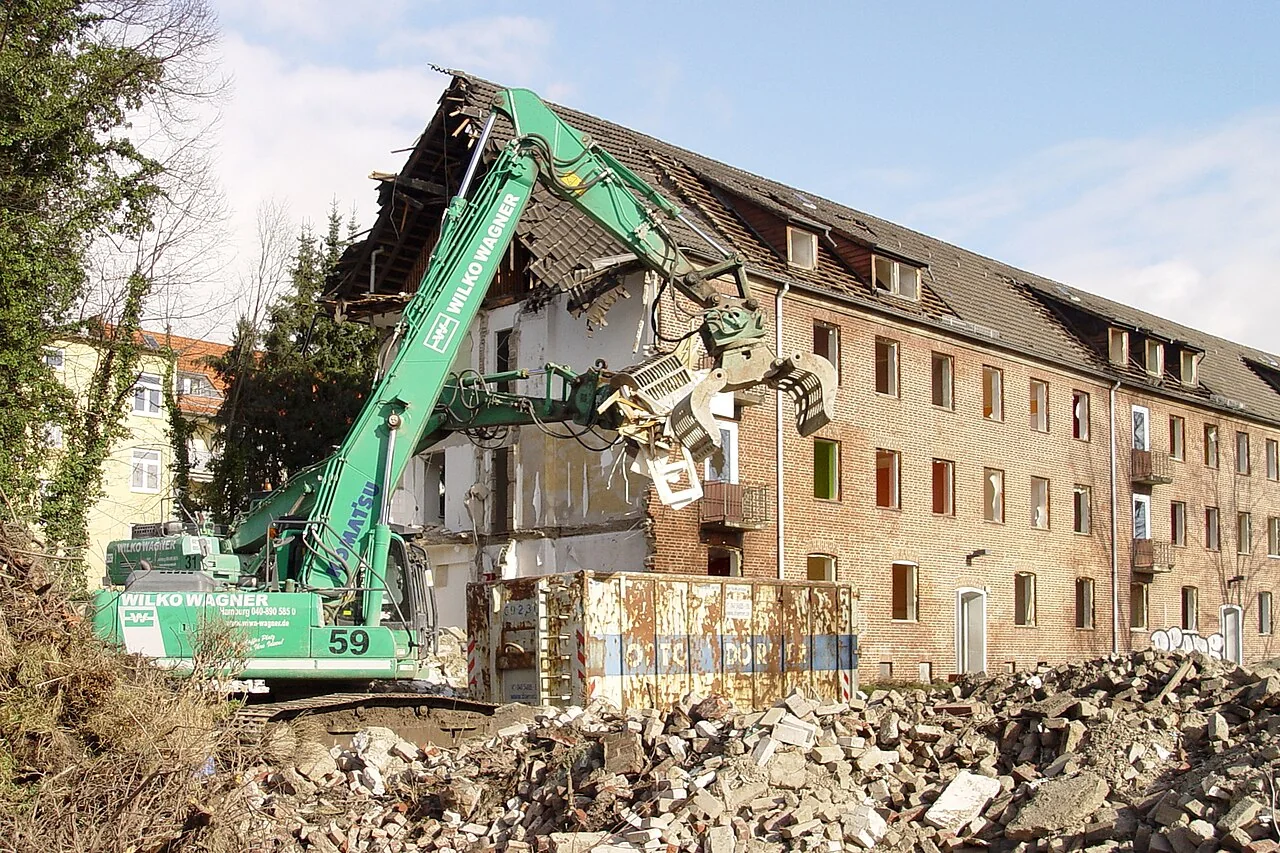
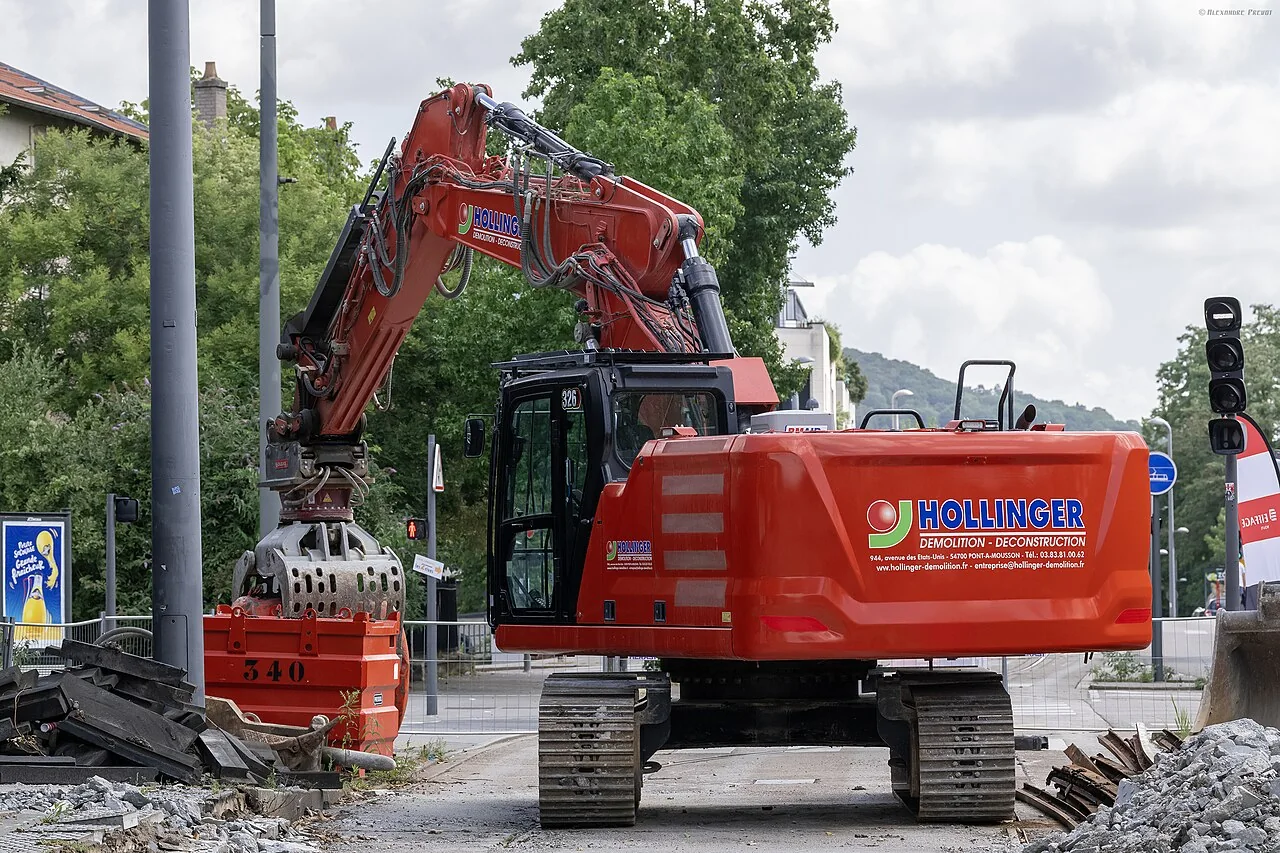
A sorting grapple—also called a selector grab, demolition sorting grapple or rotating grapple—uses two opposing shells or jaws to grip, separate, load and position material. Most excavator models combine hydraulic opening and closing with continuous rotation, allowing the operator to align the jaws without repositioning the carrier.
The attachment is valued for precision. It can remove individual pieces from mixed demolition waste, load irregular scrap, place rocks, feed crushers, separate timber and clear a work area without repeatedly changing tools. Open shell designs also let fines fall through and improve the operator’s view of the load.
Key limitation: a sorting grapple is a handling tool, not a universal crusher. It can pull, twist and place material, but structural demolition, concrete reduction or steel cutting may require a pulverizer, processor, shear or breaker.
MAIN CONFIGURATIONS
Sorting grapple types and shell designs
The upper head, rotation system and shell geometry determine how the grapple behaves. Model names differ between manufacturers, so compare drawings and operating data instead of relying on labels alone.
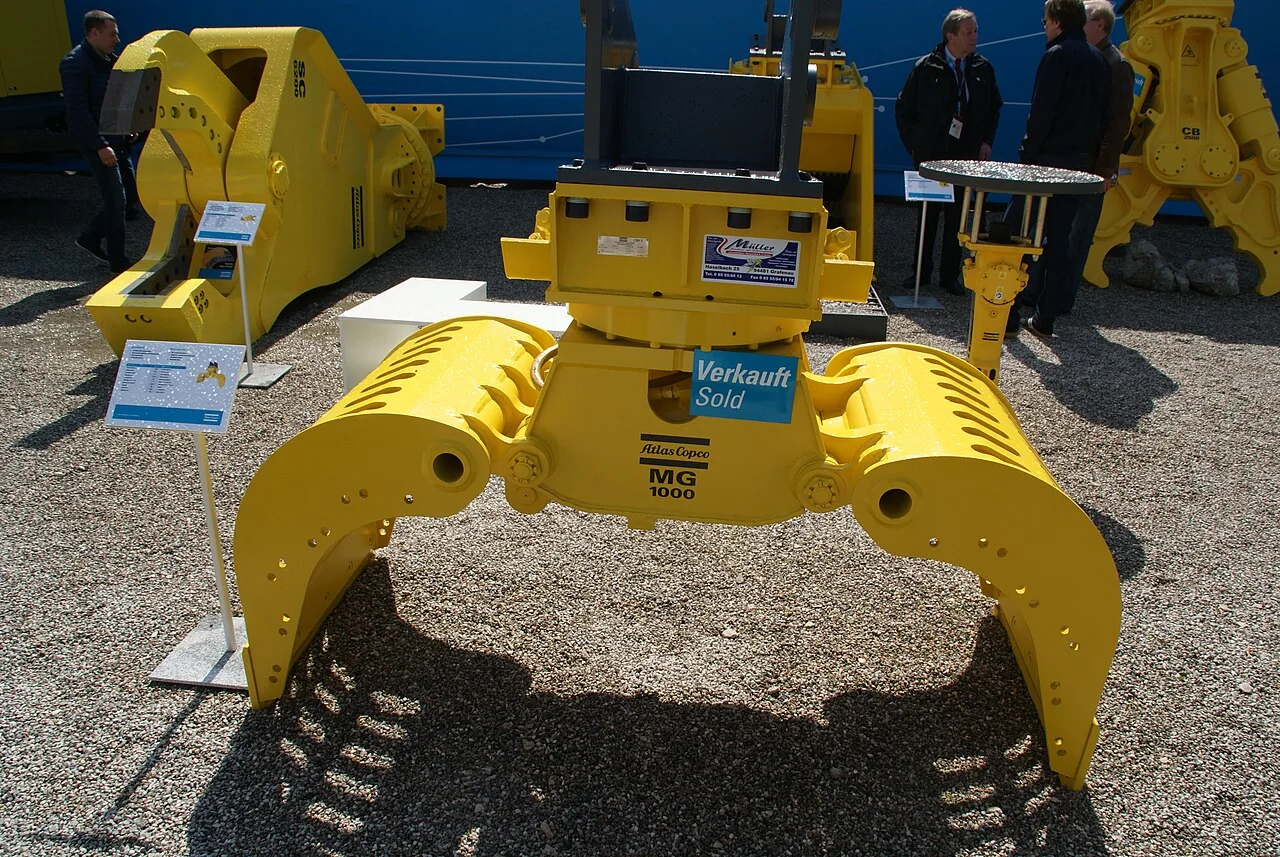
Rotating sorting grapple
The standard demolition and recycling configuration. Continuous or wide-angle rotation lets the operator align the jaws precisely, sort from one position and load containers with less carrier movement.
Fixed sorting grapple
A non-rotating upper head reduces height, weight and hydraulic demand. It can suit machines equipped with a tiltrotator or applications where the carrier supplies enough positioning freedom.
Heavy-duty demolition grapple
Reinforced shells, protected components and replaceable cutting edges for frequent demolition, concrete debris, rebar and abrasive mixed material. Strength normally comes with higher attachment mass.
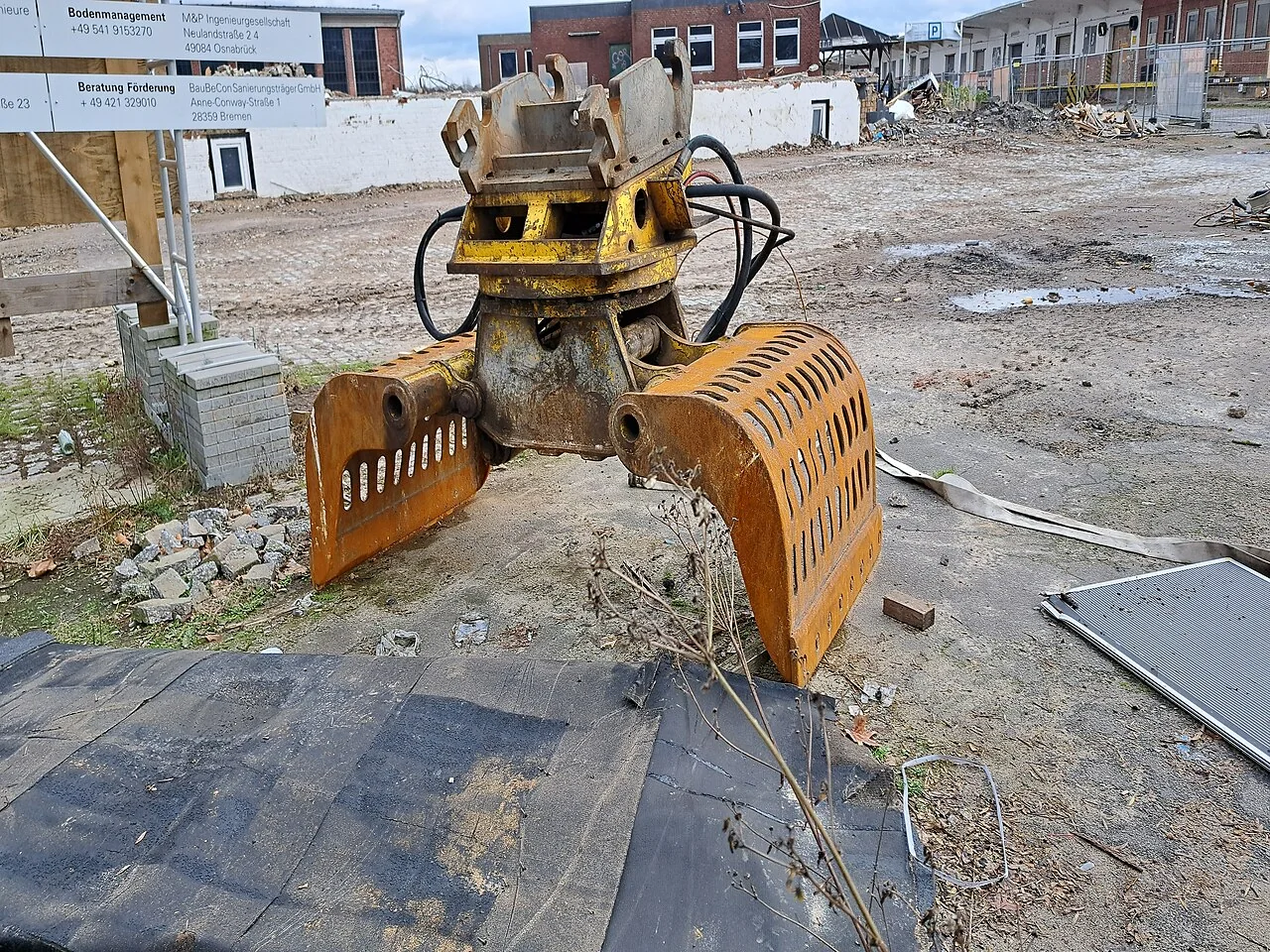
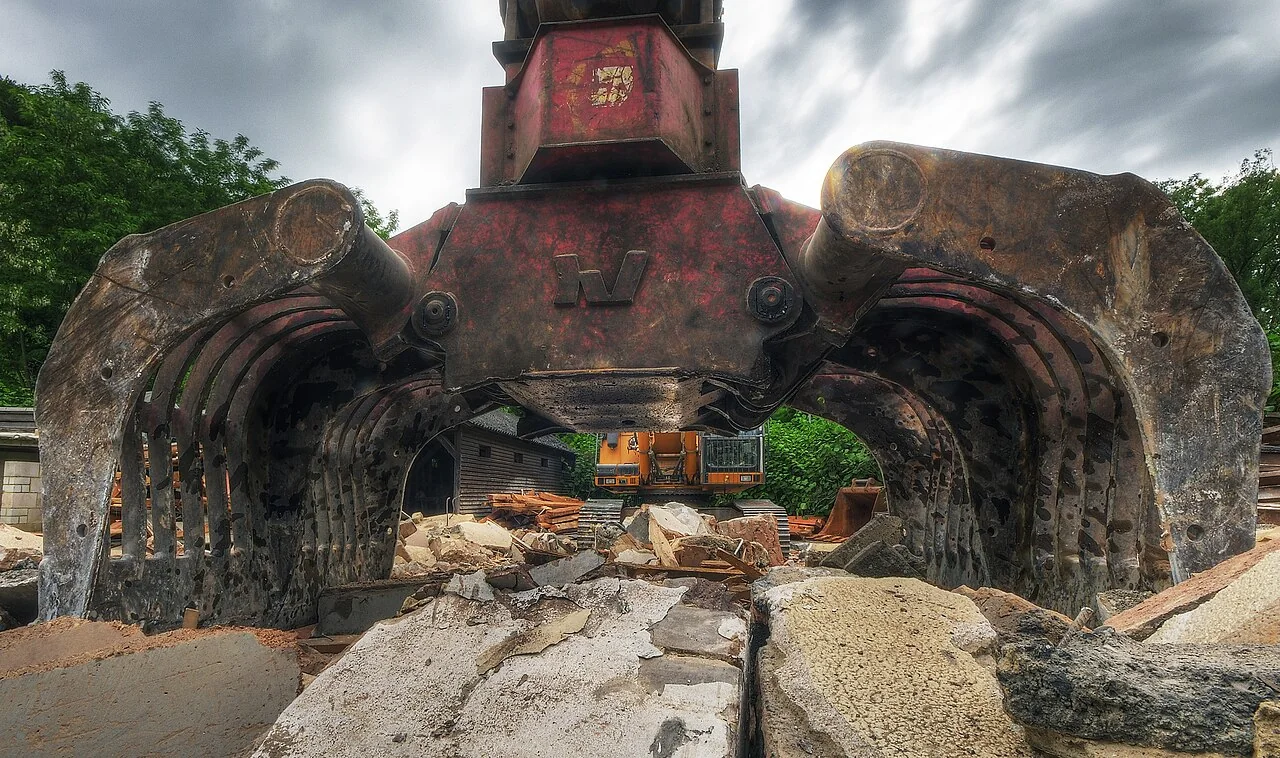
Skeleton shells
Open ribs release soil and fines, improve visibility and reduce unnecessary retained material. Common for demolition sorting, rock handling and coarse recycling streams.
Perforated shells
Smaller openings retain light or fragmented material while still allowing some screening. Useful where a fully open skeleton loses too much of the target load.
Closed shells
Higher containment for loose, bulky or low-density waste. They can improve loading volume but reduce visibility and may trap fine material that an open shell would release.
Do not confuse shell capacity with usable payload. A high-volume shell can collect more material than the carrier can safely control. The real limit is the complete loaded attachment at the actual working radius.
OPTION SELECTION
Choose the configuration around the material stream
A sorting grapple should be selected around what the machine handles most of the day. Occasional secondary tasks matter, but an attachment optimized for every possible material is usually too heavy, too closed or too lightly built for the primary job.
- Mixed demolition: open skeleton shells, strong side plates, replaceable edges and protected rotation components.
- Recycling and transfer stations: fast cycles, suitable shell volume, good load retention and easy access for daily inspection.
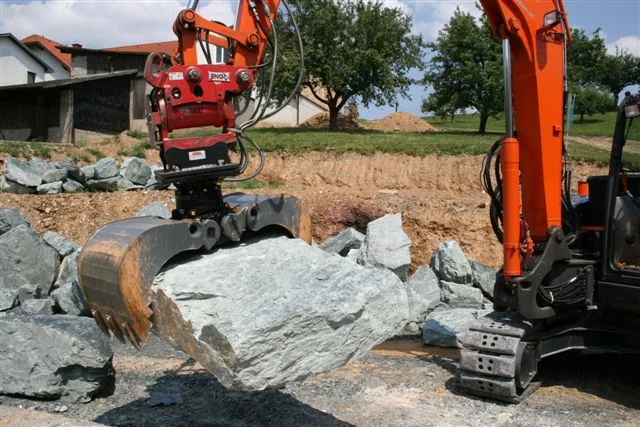
- Stone and landscaping: controlled jaw tips, strong pivot structure and enough opening to grip irregular rocks without relying on a single point.
- Timber and green waste: long material control and smooth closing are important; a dedicated timber grapple may outperform a demolition shell.
- Fine or light waste: perforated or closed shells can retain material that falls through a skeleton design.
- Precision dismantling: compact shell profile, accurate rotation and predictable edge-to-edge contact matter more than maximum nominal volume.
MACHINE MATCH
Carrier, coupler and hydraulic compatibility
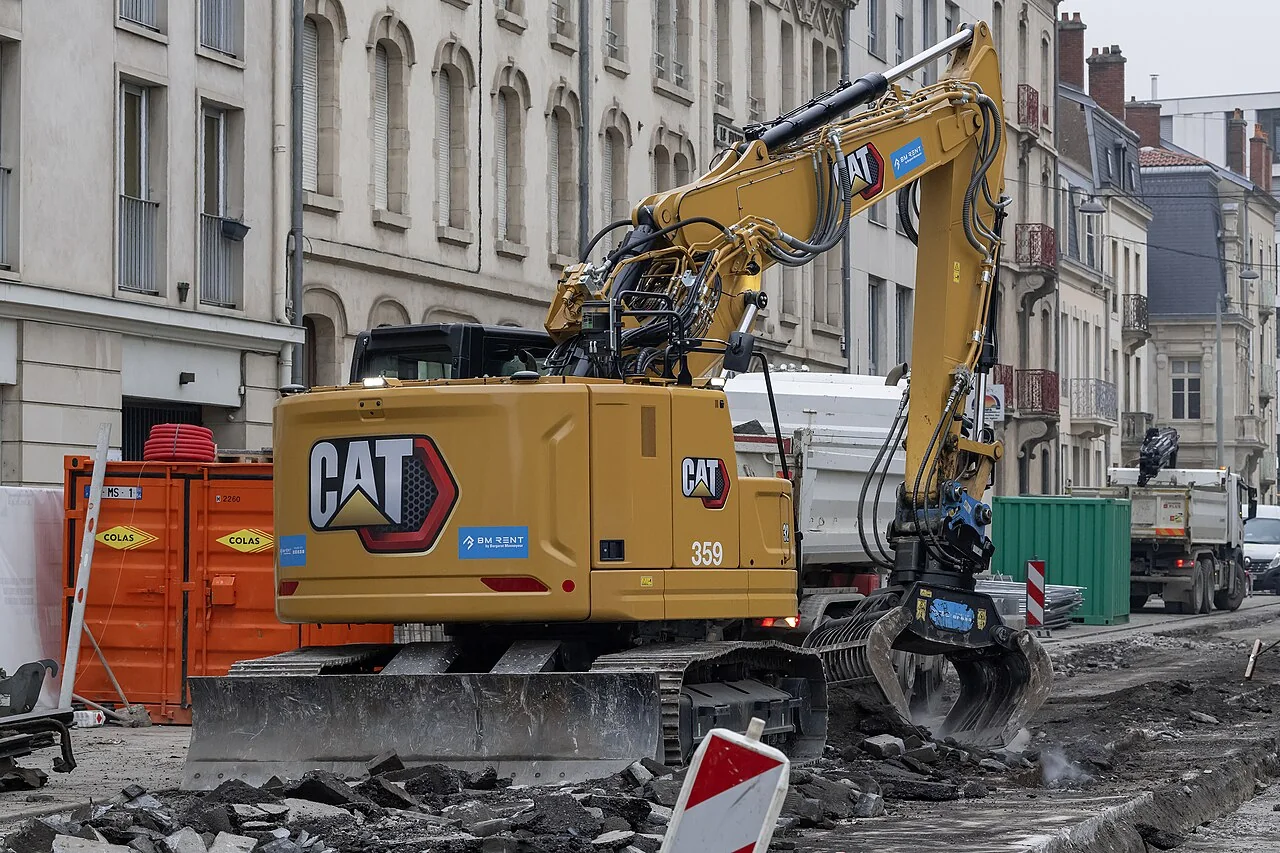
The excavator, coupler, rotator and grapple must be checked as one assembly. A model may fit the coupler yet still create too much overhang, exceed the permitted attachment mass, reduce lift capacity or demand more hydraulic flow than the auxiliary circuit can supply.
- Carrier weight class: stay within the grapple manufacturer’s approved machine range and the excavator manufacturer’s attachment limits.
- Complete installed mass: include adapter plate, quick coupler, tiltrotator, hoses and any valve block—not only the grapple catalogue weight.
- Working geometry: check full curl, dump, boom and stick clearance, transport position and interference with the coupler or linkage.
- Opening/closing circuit: confirm required pressure, recommended flow, return pressure and whether a load-holding valve is built into the attachment.
- Rotation circuit: confirm whether rotation uses a separate two-way circuit, a combined valve block or the carrier’s existing tiltrotator hydraulics.
- Case drain and leakage return: some rotation motors or control systems require dedicated low-pressure return routing.
- Electrical control: proportional functions, diverter valves and tiltrotator integration may require machine-side wiring and setup.
Practical rule: verify pressure and flow at the attachment under operating conditions. Pump specification alone does not account for valve losses, hose size, coupler restrictions or simultaneous machine functions.
SIZING
Dimensions and ratings that matter
Grapple width is only one dimension. Compare the opening, shell depth, closing geometry, installed height and loaded centre of gravity. Request a dimensional drawing for the exact upper head and coupler interface.
| Item | What it controls | What to check |
|---|---|---|
| Attachment mass | Carrier stability, lift capacity and cycle behaviour | Use complete installed mass including coupler and adapter |
| Maximum opening | Largest object and approach angle | Check useful opening at the shell tips, not only a nominal arc |
| Shell width and depth | Load retention and access in confined areas | Balance volume against visibility and precision |
| Shell volume | Bulk loading productivity | Confirm material density and realistic fill factor |
| Closing force | Grip on irregular material | Compare at relevant jaw position and system pressure |
| Installed height | Leverage and breakout geometry | A tall stack increases overhang and reduces usable capacity |
| Rotation torque | Ability to align and manipulate loads | Consider long or offset objects, not only empty rotation |
| Hydraulic flow range | Cycle speed and heat generation | Set machine flow to the attachment recommendation |
| Maximum pressure | Structural and seal protection | Use approved relief settings on both functions |
| Edge contact / overbite | Small-object control and shell protection | Confirm how shells meet and whether stops are replaceable |
Loaded attachment mass can be estimated as empty installed mass + retained material volume × realistic bulk density. Use wet, compacted or contaminated material where those conditions are credible, not an optimistic dry density.
PRODUCTIVITY
Capacity, speed and control must be balanced
Fast opening and closing can improve sorting cycles, but excessive flow creates impact, heat and difficult control near the end stops. A large shell volume can improve loading of light waste while making dense loads too heavy. Productivity comes from repeatable cycles, not one oversized grab.
Hydraulic setup checks
- Set opening/closing flow for controllable movement throughout the stroke.
- Set rotation flow separately where possible; rotation normally needs less flow than the jaw cylinder.
- Confirm relief pressure in both directions and verify any cross-line or shock protection.
- Inspect hose routing through full rotation and all boom/stick positions.
- Avoid using the grapple as a lever against the ground while rotating; shock loads can damage the slew system.
- After installation, monitor oil temperature and cycle response during a realistic duty cycle.
STRUCTURE & WEAR
Shells, pivots and replaceable edges
The shell assembly carries repeated bending, impact and abrasion. Look beyond plate thickness: geometry, reinforcement transitions, pivot support, cylinder protection and replaceable wear parts determine service life.
- Cutting edges: bolt-on or weld-on edges protect the shell mouth and restore accurate closing as wear develops.
- Side cutters and tips: concentrate contact on irregular material and are often the first components to round off.
- Shell ribs: must resist spreading while leaving enough open area for visibility and fines release.
- Main pivots: bushings, pins and grease paths should be accessible and replaceable before housing wear develops.
- Cylinder mounting: guards and recessed geometry reduce exposure to protruding steel and falling debris.
- Rotation bearing: sealing and protection matter in dust, concrete fines and mixed waste.
- Mechanical stops: prevent damaging over-travel and may control edge-to-edge contact or deliberate overbite.
COMMON APPLICATIONS
Where sorting grapples add value
The attachment is most effective when the work requires repeated selection, orientation and placement of irregular material. It can reduce manual handling and unnecessary carrier movement when the work area and exclusion zone are properly planned.
Demolition and deconstruction
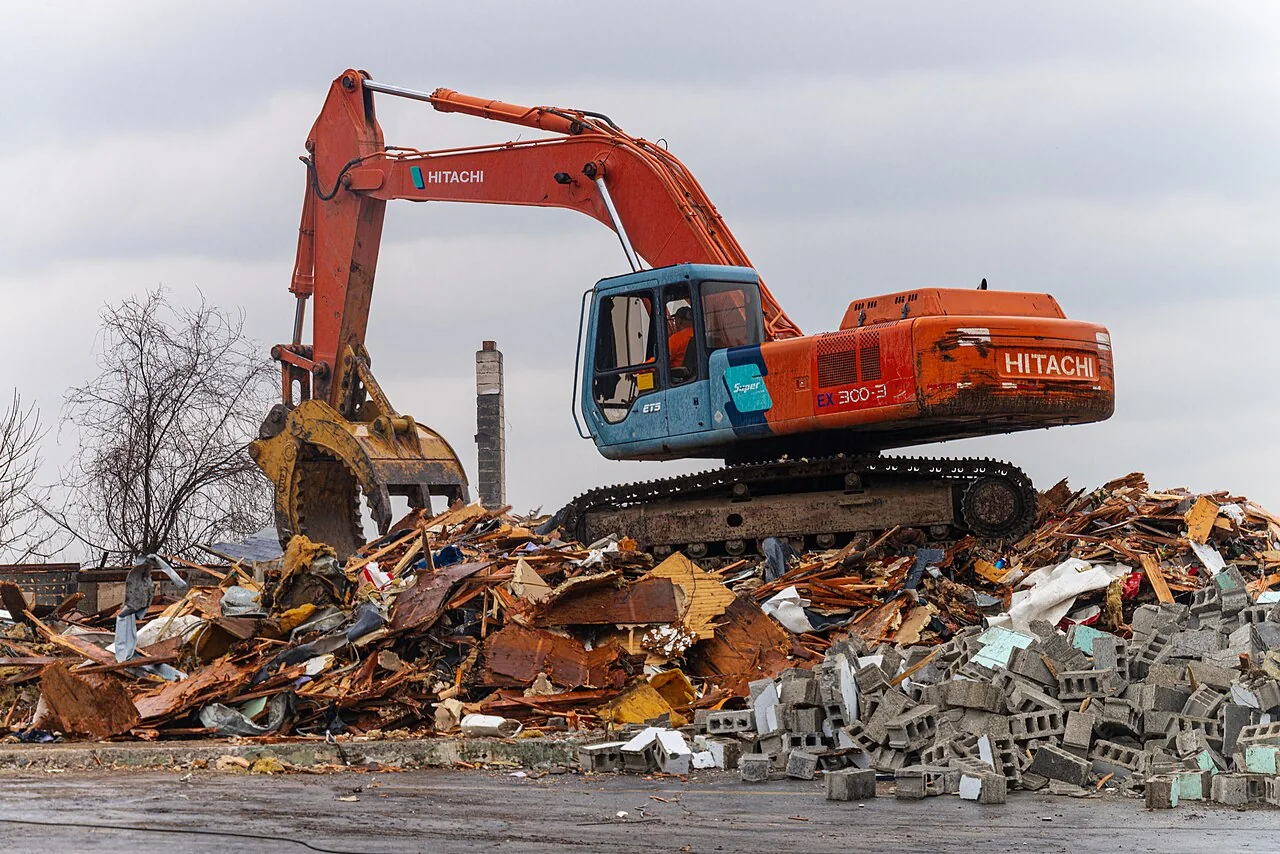
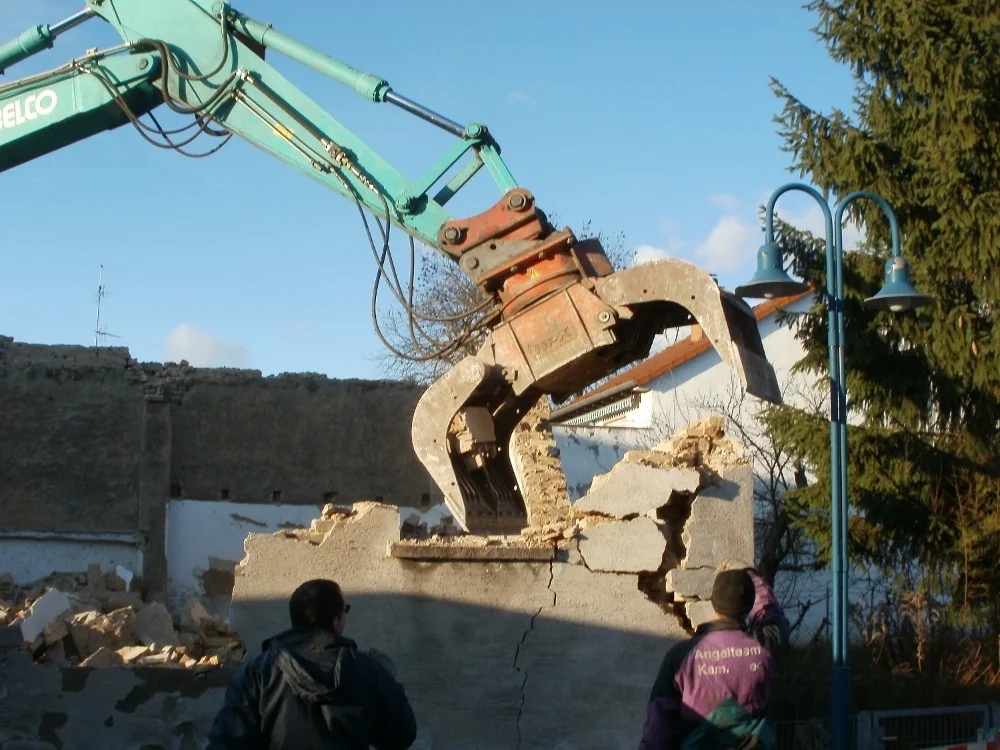
Remove timber, sheet material, insulation, steel and concrete pieces selectively. A rotating grapple can separate material streams, clear around a processor or breaker and load containers without changing carrier position.
Recycling and transfer stations
Sort bulky waste, feed processing equipment and load skips or trucks. Shell type and volume should match the density and particle size of the incoming stream.
Site clearance and landscaping
Handle stones, roots, branches and irregular site material. For repetitive logs or brush, compare a purpose-built timber or brush grapple before choosing a demolition design.
COMPACT MACHINES
Sorting grapples for mini excavators
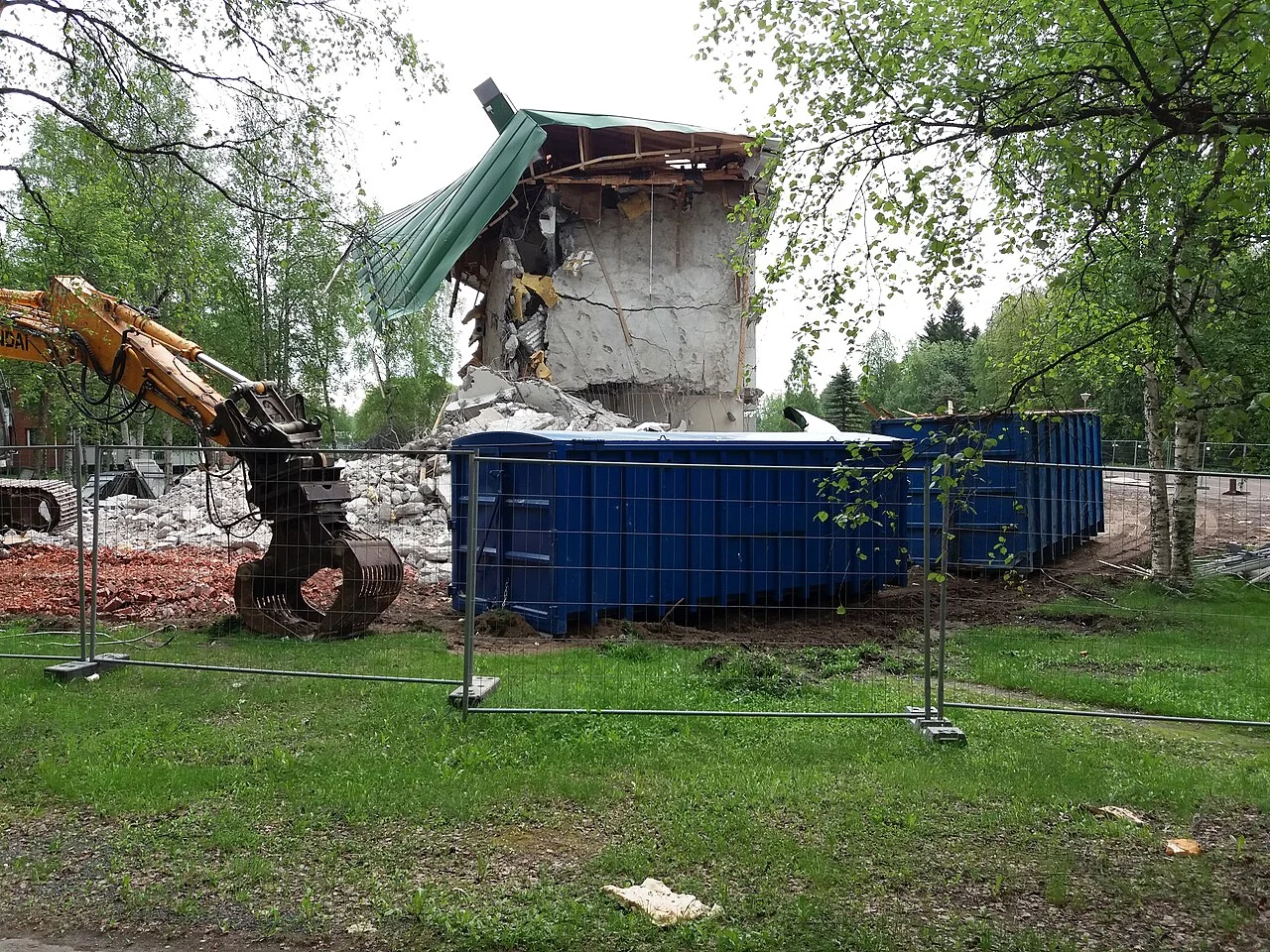
Smaller grapples can transform a mini excavator into a precise handling machine, but the attachment stack is especially sensitive to weight and height. A coupler, adapter and rotator can consume a large share of the available lift capacity before any material is picked up.
- Prioritize low installed weight and low build height over unnecessary shell volume.
- Check side-lift stability with the blade raised and lowered, at full and intermediate reach.
- Confirm the auxiliary circuit can provide smooth proportional control at low flow.
- Use shell geometry that can enter the actual work area without contacting structures or trench support.
- Avoid assuming that a grapple marketed for the same machine tonnage is approved for every coupler or tiltrotator combination.
- Plan transport width, attachment storage and safe connection procedures before site use.
ROTATION SYSTEM
Rotation improves placement—but adds requirements
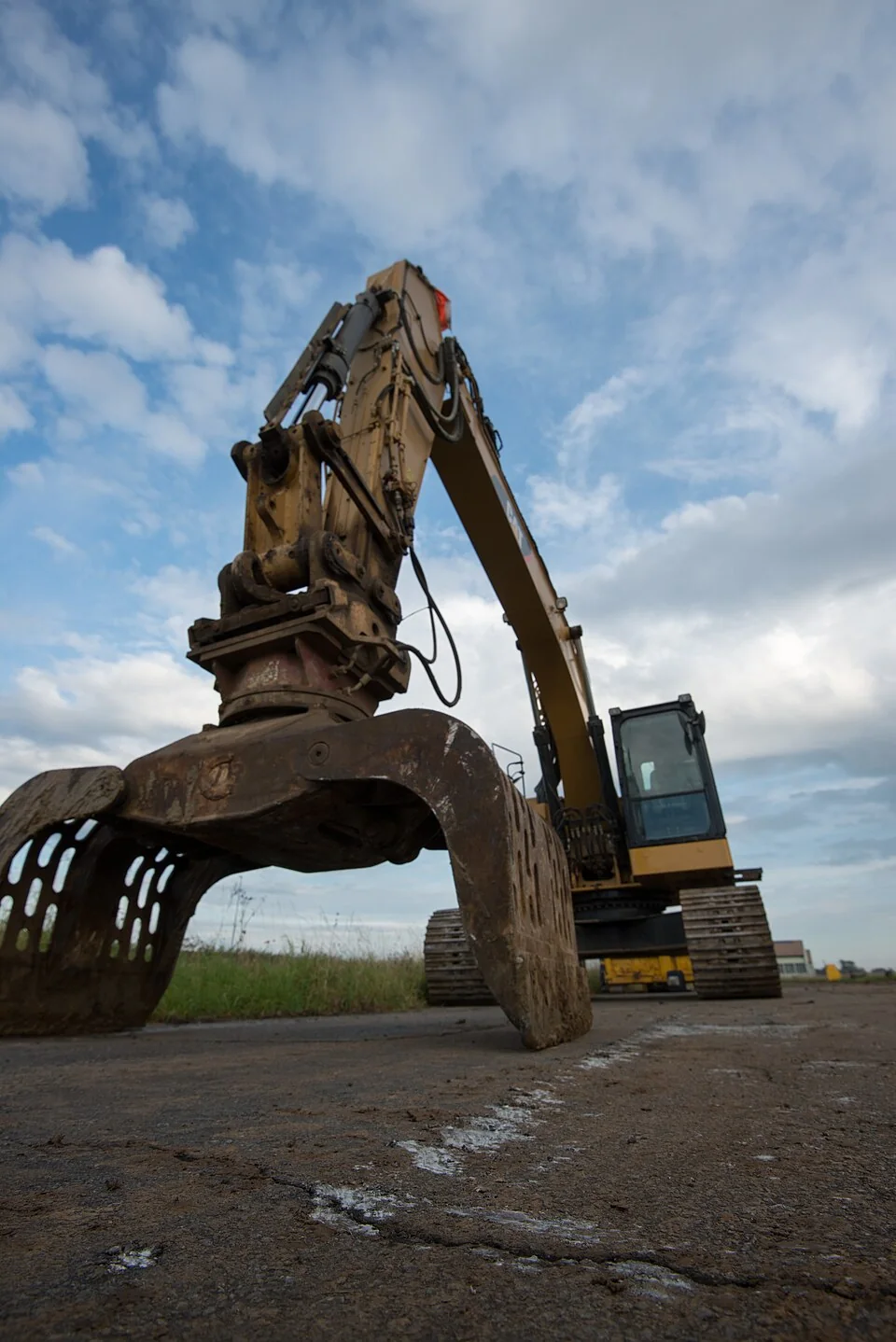
Continuous rotation allows the jaws to approach material from the best angle, align long pieces and place loads accurately. It also adds a slew bearing, motor, seals, hoses and controls that must be protected and maintained.
- Torque: the rotator must turn the loaded grapple, not only the empty attachment.
- Braking and load control: the grapple should hold orientation without uncontrolled drift.
- Hose management: continuous rotation requires a hydraulic swivel or suitable internal routing.
- Independent functions: opening/closing and rotation should remain controllable without unwanted interaction.
- Transport: follow the specified locking or parking position so shells cannot open or swing unexpectedly.
- Service access: grease points, inspection covers and motor connections should be reachable without major disassembly.
A fixed grapple can still be the better option when a tiltrotator already provides rotation or when low mass, simple hydraulics and maximum carrier capacity are more important than independent attachment rotation.
ATTACHMENT COMPARISON
When another attachment is the better choice
Sorting grapples overlap with several handling and demolition tools. Choose by the dominant task rather than expecting one attachment to replace every specialist.
| Alternative | Better suited to | Why it may outperform a sorting grapple |
|---|---|---|
| Demolition pulverizer | Crushing concrete and separating reinforcement | Higher crushing force and purpose-built jaw geometry |
| Hydraulic breaker | Breaking mass concrete or rock | Delivers repeated impact instead of grip and manipulation |
| Orange-peel grapple | Loose scrap and bulk metal handling | Multiple tines penetrate irregular scrap piles and close around loose loads |
| Clamshell grab | Bulk excavation or loose material loading | Closed bucket geometry retains soil, sand and aggregate |
| Timber grapple | Logs, poles and forestry material | Jaw shape supports long round loads with lower unnecessary shell mass |
| Thumb and bucket | Occasional handling during excavation | Lower complexity when continuous rotation and precision sorting are not required |
| Hydraulic shear | Cutting structural steel and scrap | Concentrated cutting force and replaceable blades |
| Screening bucket | Separating fines from reusable material | Active or passive screening instead of individual item selection |
OPERATION
Use controlled grip, not uncontrolled force
Correct technique reduces shock loads and improves sorting accuracy. The operator should approach with the shells open enough for visibility, close progressively, confirm the load is secure and then lift smoothly. Do not use rotation as a substitute for the carrier’s breakout force.
- Keep people outside the drop zone, swing radius and potential material roll path.
- Grip the load near its stable centre where possible; long pieces can rotate or slide after lifting.
- Avoid pinching pressurized cylinders, tanks, sealed containers or unidentified hazardous material.
- Do not lift above the manufacturer’s rated attachment and carrier limits.
- Avoid dragging with the rotator bearing or striking the shell side against fixed structures.
- Use smooth proportional control near containers, buildings, utilities and personnel exclusion boundaries.
- Place material rather than dropping it whenever uncontrolled bounce, dust or fragmentation creates risk.
- Stop work if the shells close unevenly, hoses twist, the rotator develops play or the load-holding function changes.
MAINTENANCE
Daily inspection and wear control
A short inspection before each shift is more effective than waiting for visible failure. Demolition dust and irregular loads can hide cracked welds, damaged hoses and developing pivot play.
Before or during each shift
- Check coupler locking, adapter bolts and upper-head fasteners.
- Inspect hoses, fittings, swivel connections and guards through full rotation.
- Confirm both shells move evenly and stop in the intended closed position.
- Grease specified pivots and rotation points at the stated interval.
- Inspect shell edges, tips, ribs and weld transitions for impact or abrasion damage.
- Remove trapped wire, straps and debris before they damage seals or restrict movement.
- Check unusual noise, heat, leakage, drift or play before continuing production.
Planned service
Measure pin and bushing wear, check rotation bearing play, verify bolt torque, inspect cylinder pins and replace edges before base material is lost. Record repairs and operating hours so wear trends can be compared between sites and applications.
BUYING CHECKLIST
Information to confirm before ordering
- Carrier: exact excavator model, configuration, counterweight and operating mass.
- Interface: coupler type, pin dimensions, adapter drawing and any tiltrotator.
- Primary material: composition, dimensions, density, contamination and abrasiveness.
- Required task: selective dismantling, loading, feeding, placement, sorting or occasional handling.
- Duty cycle: hours per day, cycles per hour and expected annual use.
- Hydraulics: available pressure, flow, return line, case drain and control method.
- Geometry: opening, shell width, installed height, centre of gravity and full movement clearance.
- Safety functions: load-holding valve, transport position, mechanical stops and approved lifting provisions.
- Wear package: replaceable edges, tips, bushings, pins, hose guards and rotation protection.
- Support: spare-parts lead time, service instructions, dimensional drawing and hydraulic schematic.
Ask the supplier to confirm the complete proposed configuration in writing. A model recommendation based only on “excavator tonnage” is not enough for a rotating attachment with substantial installed height and variable loads.
FAQ
Frequently asked questions about sorting grapples
What is the difference between a sorting grapple and a demolition grapple?
The terms overlap. A sorting grapple emphasizes controlled selection and placement, while “demolition grapple” often indicates heavier shells and protection for harsh demolition. Many products are sold as demolition and sorting grapples because they perform both tasks.
Does a sorting grapple rotate continuously?
Many excavator sorting grapples provide continuous 360-degree rotation through a hydraulic swivel, but fixed and limited-rotation models also exist. Confirm the exact upper-head design and machine-side hydraulic requirements.
Can a sorting grapple crush concrete?
It can grip, pull apart and move broken concrete, but it is not normally designed to crush structural concrete efficiently. Use a pulverizer, crusher or breaker when reduction is the primary task.
How large should the grapple be for an excavator?
Use the attachment and excavator manufacturers’ approved ranges, then verify complete installed mass, geometry, hydraulics and loaded stability. Machine tonnage alone is not sufficient.
Are open or closed shells better?
Open skeleton shells improve visibility and release fines. Closed or perforated shells retain smaller or lighter material. The correct choice depends on the material stream and whether sorting or bulk loading is the priority.
How much hydraulic flow does a sorting grapple need?
Requirements vary by jaw cylinder, rotation motor and valve system. Use the manufacturer’s recommended flow ranges for both functions and set the carrier accordingly. Excessive flow can create heat and harsh end-stop impact.
Can it be used for lifting suspended loads?
Only when the complete attachment and lifting point are specifically approved for that use and the carrier chart, local rules and lifting procedure are followed. Do not treat normal grapple jaws as a certified lifting device.
What wears fastest?
Cutting edges, tips, shell pivots, bushings, hoses and rotation seals are common wear areas. Actual wear depends heavily on abrasive material, side loading, impact and lubrication.
Is a fixed grapple better with a tiltrotator?
It can be. The tiltrotator already provides rotation and tilt, so a fixed upper head may reduce height and weight. Compatibility, control integration and total load still need to be checked.
What information should be on the quotation?
Exact model, carrier range, attachment mass, dimensions, opening, shell volume, pressure and flow, rotation torque, coupler interface, valves, included hoses, wear parts, warranty and drawings.
CONTINUE RESEARCH
Compare the grapple with the machine, material and job—not only the catalogue size
Use the parent categories and related attachment guides to compare demolition, recycling and material-handling alternatives before specifying the final configuration.